
Brush and fence-row clearing around Bremen
A fence row left alone for fifteen years turns into a thicket of box elder, mulberry and multiflora rose, eating a strip of field on both sides. We cut it back to ground you can farm, mow or fence again, and chip what comes out.
The short answer
Brush clearing takes out the scrub, saplings, vines and junk trees that have filled in a fence row, a field edge or a neglected corner of a property, and keeps any good trees you want standing. The brush gets chipped, and you're left with open ground instead of a wall of thorns.
What grows in an old fence row
Birds sit on fence wire and drop seeds, so fence rows fill in faster than anywhere else on a farm. Around here that usually means a mix of box elder, mulberry, wild cherry, honeysuckle and multiflora rose, with grapevine climbing through all of it. Left long enough, the saplings become trees with trunks as thick as a leg, and their shade and roots take a strip of crop ground on both sides of the line.
The thorny growth is what makes it miserable to do yourself. Multiflora rose canes will tear through a shirt and hook your arms the whole time you're cutting.
Keep the good trees
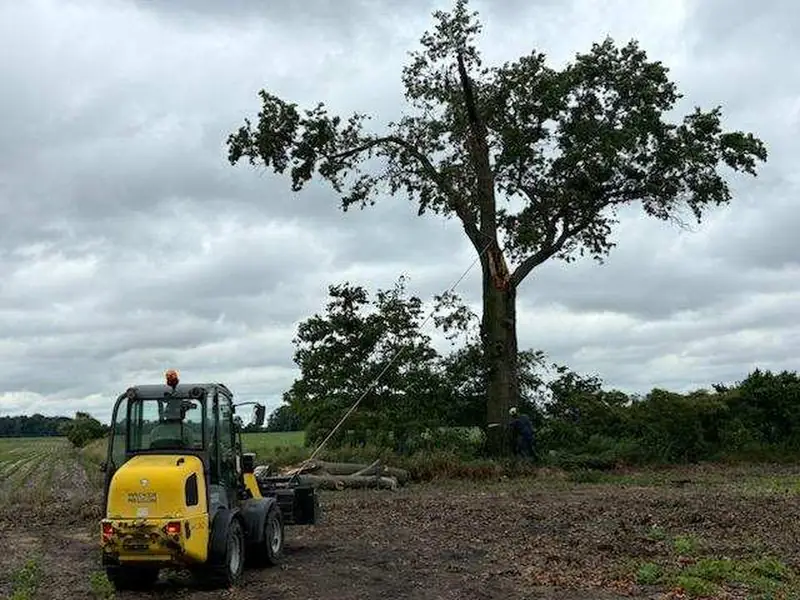
Not everything in a fence row has to go. A big, sound oak or hickory in a tree line can be worth keeping for shade, a windbreak or just the look of the property. Clearing around it, like the lone oak at the top of this page, gets the brush out of its way without losing the tree. We'll walk the row with you and agree on what stays before the loader starts.
How it gets cleared
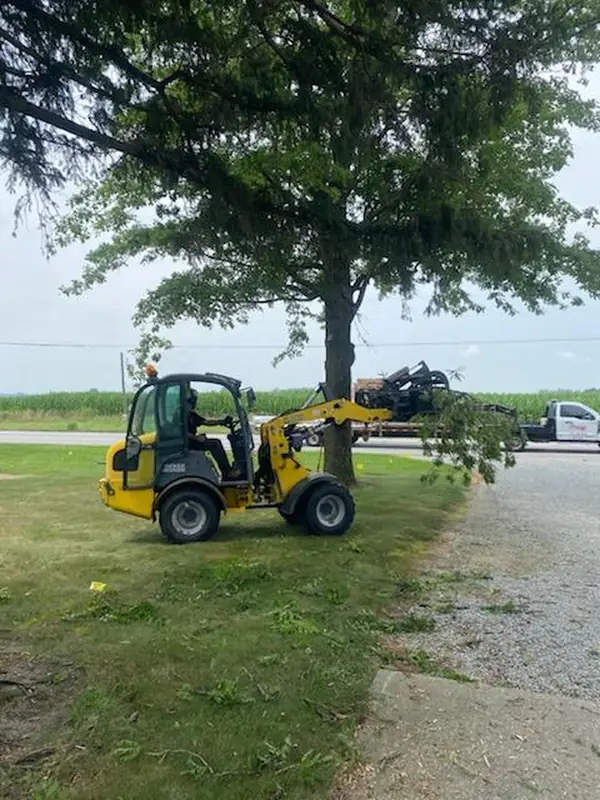
Trees in the row are cut down, and anything big enough to be dangerous comes down in a controlled direction, away from the field or the neighbor's line. The compact loader grabs the brush and saplings and moves them to the chipper, so the pile doesn't get left in the field. Stumps along a row are a decision: cut low, or ground so a tiller or a mower can cross the line again.
Old woven wire and barbed wire buried in a row are the main hazard. A tree that grew around a fence for forty years has wire in its trunk. If you know where the old fence ran, tell us at the estimate.
Keeping it from coming back
Most of what grows in a fence row sprouts from the stump if it's only cut. Mowing the line a few times a season for the first couple of years wears the regrowth out, and grinding the stumps of the worst offenders helps. If a new fence is going in along the same line, ask your fence builder how much cleared width they want on each side.
When it's more than brush
If you're clearing a wooded area to put up a house or a pole barn, the job is less about brush and more about exactly where the building, drive and septic go. We cover that on our guide to clearing a lot for new construction.
Bigger ground to clear? The main lot clearing service covers building sites, overgrown acreage and more field.