
Tree assessment in Bremen, IN: should it stay or go?
You've been looking at that tree from the kitchen window for a while. Maybe it's the crack in the trunk, the bare side, or the way it leans toward the garage. An experienced arborist walks it with you and gives you a straight answer.
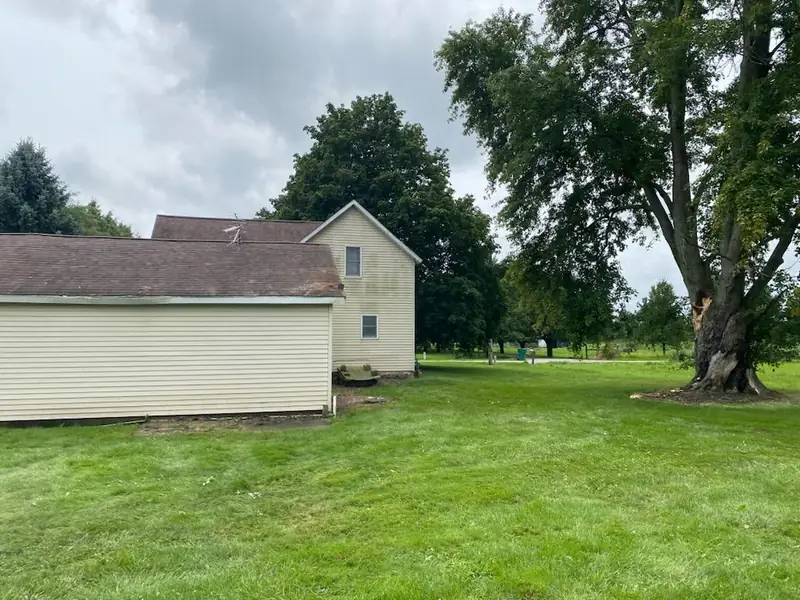
What we look at on a tree
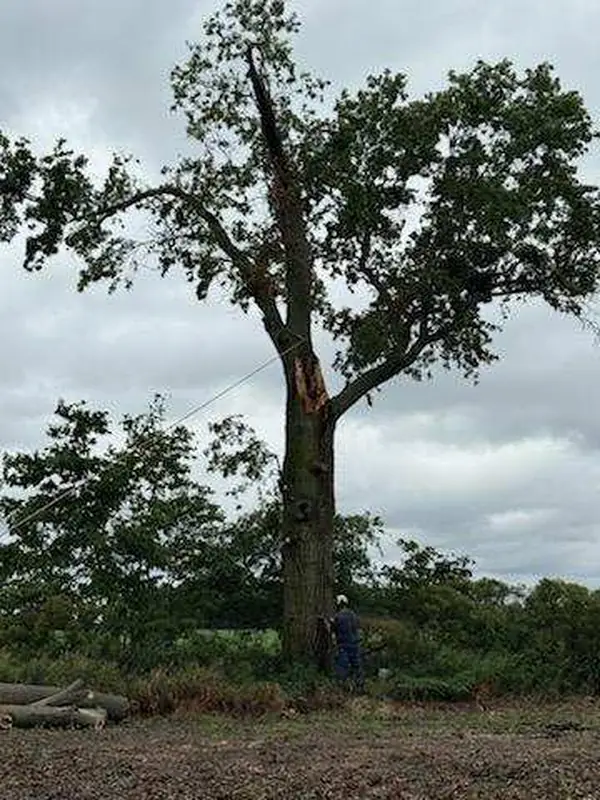
We start at the ground and work up. At the base: soil heaving or cracking on one side, roots that have been cut by a trench or a driveway, mushrooms or soft wood at the root flare. Along the trunk: cracks, seams, cavities, bark falling away, and old wounds that never closed. In the crown: dead limbs, a thin or one-sided canopy, branches joined in a tight V with bark pinched between them.
Then we look at what's around it. The same flaw means something very different over a house or a play set than it does out in an open pasture. A tree is only as risky as what it could land on.
Keep it, trim it or take it down
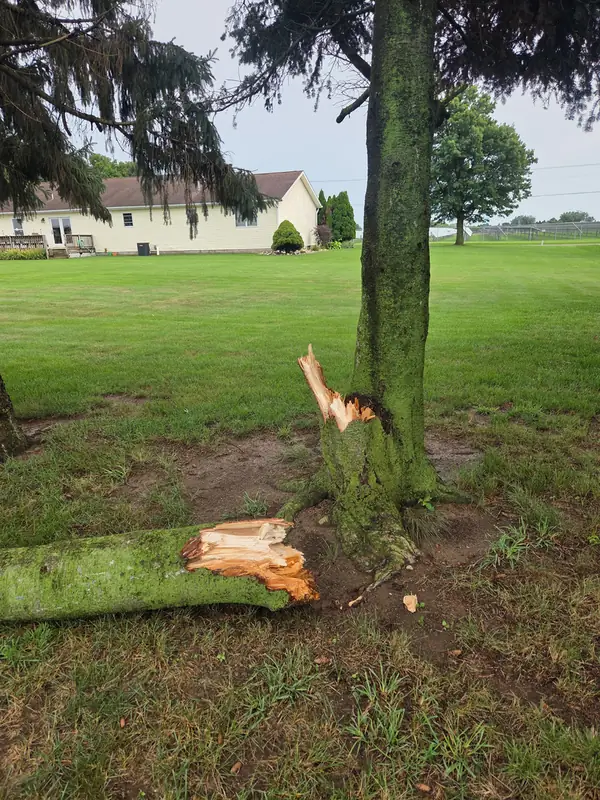
Most assessments end in one of three places. Some trees are fine and just look rough; we'll tell you so and you can stop worrying about them. Some are worth keeping with work: dead wood cut out, weight taken off a heavy limb, clearance over the roof. And some have a flaw that won't get better, standing over something that matters, and the honest answer is to take them down on your schedule before a storm decides for you.
When removal is the call, we'll explain why. Dead trees are the most common case, and ash trees killed off in recent years are high on that list; our page on removing dead and ash trees covers why they get more dangerous the longer they stand. Trees leaning toward the house need the most careful planning, which we cover in taking down a tree next to the house.
Signs you can spot yourself
You don't need training to notice the big ones. Walk around the tree and look for:
- A crack or split running up the trunk, or where two main stems meet
- A lean that's new, or soil lifting on the side away from the lean
- Mushrooms or conks growing on the trunk or at the base
- Branches with no leaves in summer, or bark falling off in sheets
- Sawdust-like material at the base, or woodpeckers working one spot hard
- Big limbs hanging broken in the canopy after a storm
Any one of those over the house, the drive or the wires is worth a call. Our quick tree check sorts what you're seeing into call-today or can-wait.
Something already broke?
If a limb or trunk has failed and is resting on something, skip the assessment and call. That's a storm damage job.
Tree checks around the area
We look at trees in town yards and on farm places across Marshall, St. Joseph and Elkhart counties.
Tree assessment questions
No. Plenty of trees grow at a lean and stay that way for decades. A lean that appeared recently, or soil cracking and lifting on the side away from the lean, means the roots are giving way, and that one needs a look soon.
Often, from the outside signs: cavities, fungus on the bark, a hollow sound when the trunk is tapped, old wounds that rotted in. A hollow tree isn't automatically unsafe; what matters is how much solid wood is left around the hollow and what the tree stands over.
If a storm broke limbs or pushed trees around, yes, especially the ones over the house. Cracks that open in a storm don't always show from the ground right away, and a tree that survived one blow can fail in the next.