
Deadwood removal: taking the dead limbs out of a living tree
A tree can be healthy and still carry a dozen dead branches up top. Those are the ones that come down on a calm afternoon, on the car or the deck. Deadwooding takes them out before they choose the moment.
The short answer
Deadwood removal means cutting the dead, dying and broken branches out of a tree while leaving the living canopy alone. It's the most useful single thing you can do for a big yard tree over a house or a drive, because dead limbs are the ones most likely to break.
Why dead limbs are the dangerous ones
Live wood bends. Dead wood dries out, loses its strength and gets brittle, and it doesn't need a storm to let go. A branch that died two summers ago can drop on a still day just from its own weight, or snap in the first real wind of fall. It also tends to come down in pieces, which means a heavy chunk breaking off high in the tree with nothing to slow it.
Dead branches are also an easy way in for decay. Fungus that starts in a dead stub can work back into the main limb or the trunk over time.
How to spot deadwood from the ground
- In summer: branches with no leaves while the rest of the tree is full, or clusters of brown leaves that never dropped.
- In winter: twigs that look gray and brittle rather than supple, bark peeling or missing, and no buds at the tips.
- Any time: broken limbs hung up in the canopy (they're called hangers), fungus growing on a branch, or a limb that looks different in color from everything around it.
Binoculars help. So does looking at the tree against a bright sky.
What the work looks like
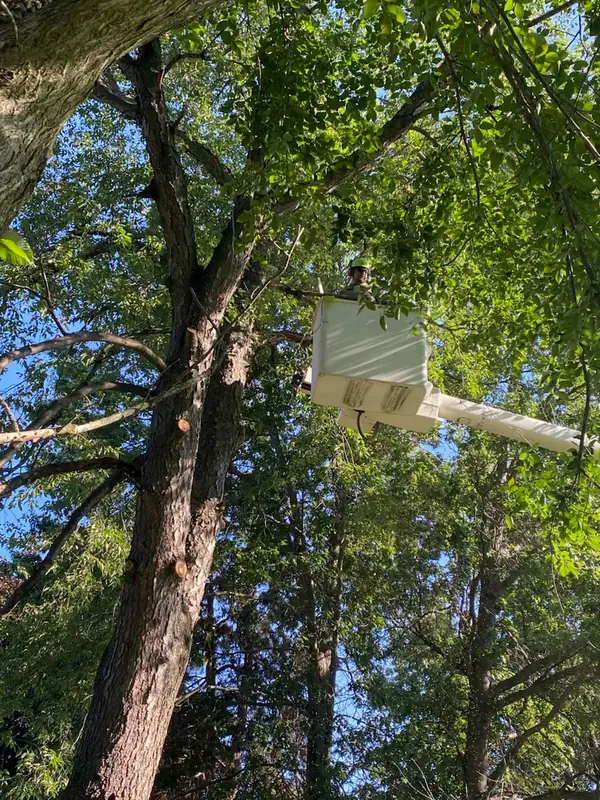
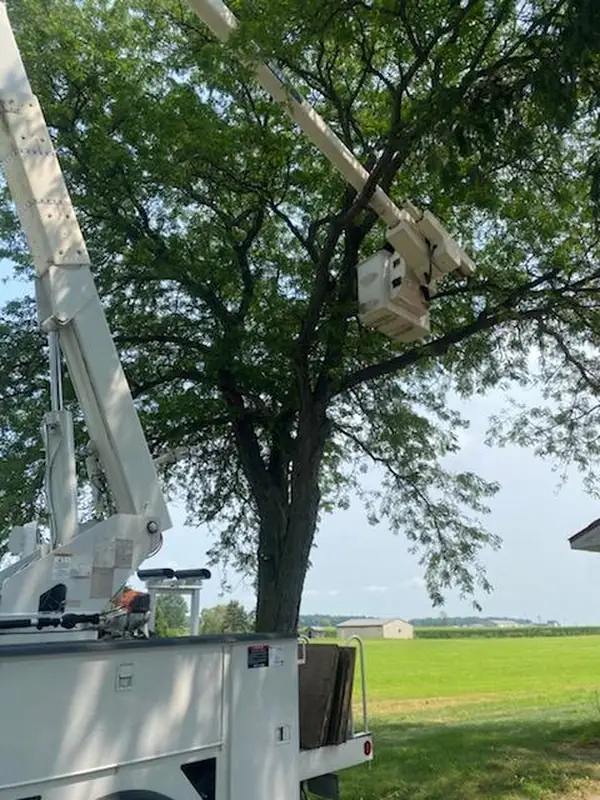
We put the bucket up into the canopy so dead limbs can be cut and lowered rather than dropped. Each cut goes just outside the branch collar, the slightly swollen ring where a branch joins a larger limb, so the living tree can seal it over. Cutting flush against the trunk, or leaving a long stub, both slow that sealing.
Because dead wood is brittle, it gets handled carefully. A dead limb can shatter when it's cut, so pieces are kept small over anything that can be damaged. The brush goes through the chipper and the ground gets raked when we're done.
When a few dead limbs mean something bigger
A handful of dead branches is normal in a mature tree. A third of the crown dying back, dead wood concentrated on one side, or dieback that's worse each year points at a problem in the roots or the trunk: construction damage, drainage, disease or insects. Dead ash trees are the most common example around northern Indiana. If what you're seeing looks like more than routine deadwood, a look at the whole tree is the better first step than a saw.
When to do it
Unlike some pruning, deadwood can come out any time of year. Winter makes it easy to see against bare branches; summer makes it easy to see against the green. The right time is before the next storm season if it's over something that matters.
Want the whole tree looked after? Deadwooding is one part of our tree trimming work, alongside roof clearance and thinning.