
Tree removal in Bremen, IN, a piece at a time from the bucket
When a tree has to go, we take it down in sections instead of dropping it whole, so the house, the fence and the flower beds are still there when we're done. Then the brush goes through the chipper and the yard gets raked.
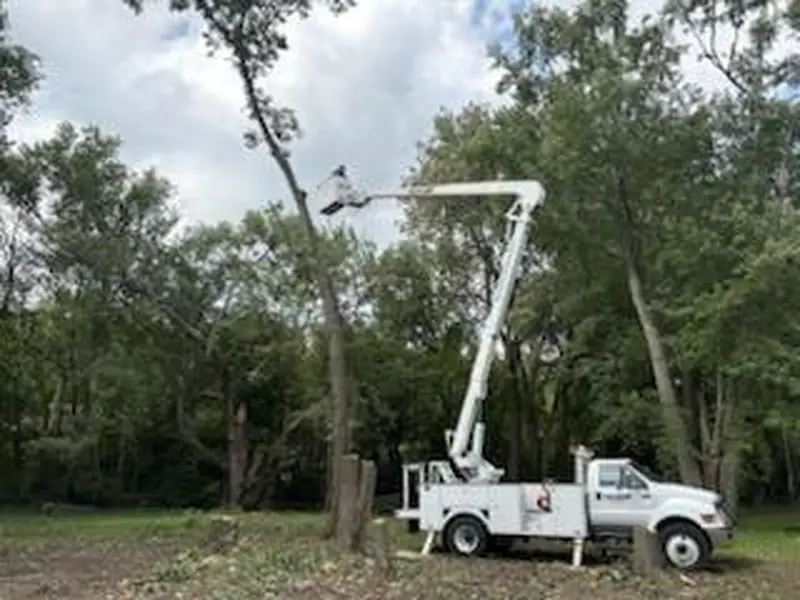
How a tree comes down piece by piece
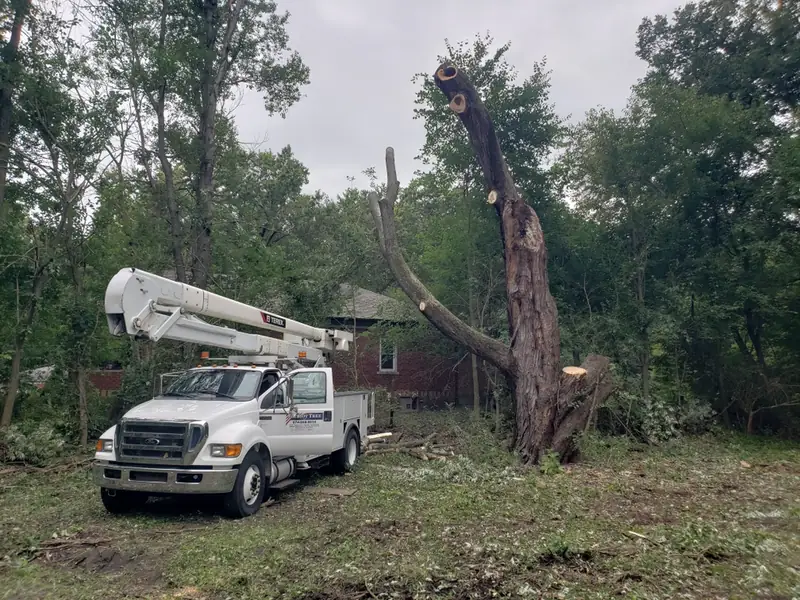
Most yard trees around Bremen don't have room to fall. There's a house on one side, a garage or a pole barn on the other, and a fence or a power line somewhere in between. So we don't fell them whole. The bucket truck puts a man up in the canopy, and the tree comes down from the top: limbs first, then the top of the trunk, then the trunk in rounds short enough to control.
Where the truck can't get close, we tell you at the estimate how that tree will come down. Either way, the compact loader carries the heavy wood out to the drive.
Before the first cut, we set the truck's outriggers on plywood pads. A loaded bucket truck on wet Marshall County ground will leave ruts you'll be mowing around for a year; the pads spread the weight and come up clean.
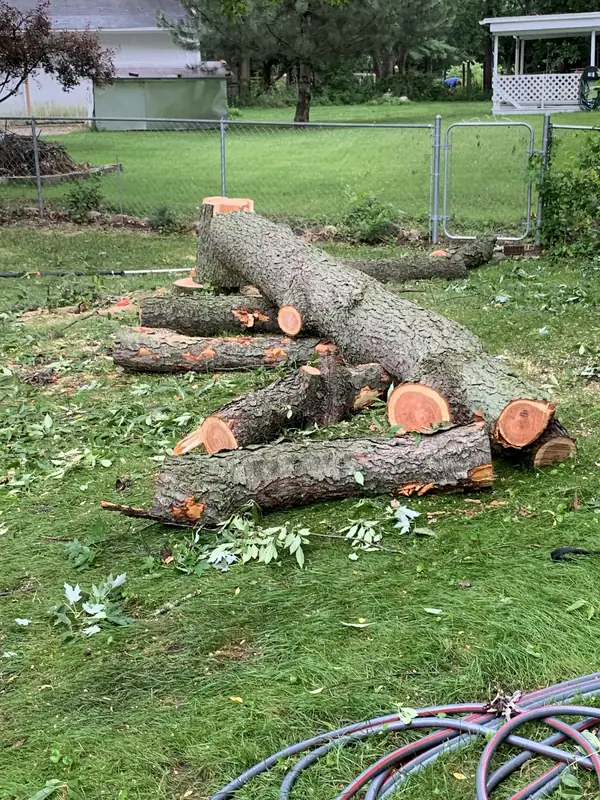
Cleanup after the last cut
The chipper comes to the job with us. Limbs and brush go through it as they come down, so there's no brush pile left at the curb for you to deal with. Once the wood is off the lawn, the yard gets raked. What you're left with is a stump, unless you've asked us to grind it too.
If you'd like the stump gone the same visit, say so when we give you the estimate. Stump grinding takes the stump below the grass line so you can mow right over the spot, and it's much easier to do while the crew and equipment are already there.
Removals next to houses, sheds and lines
The hard removals are the ones leaning over something. A silver maple over a garage roof, a pine grown into the service wire, a dead ash hanging over a neighbor's shed. Those get the most planning: where each piece is going, which way it will swing, and what we leave attached until last. We walk those trees with you before we price them, and we'll tell you if the utility needs to drop a line first.
There's more on how we handle the tightest yards on our page about removing a tree next to the house.
Is it already on the house?
Then it's a storm job, not a scheduled removal. Keep everyone out of that part of the house and call (574) 248-2614. Storm emergencies can call outside our normal hours. What happens on a storm call.
When a tree should come down
A tree that is dead, badly leaning, hollow, split or broken up by a storm may need to go, especially if it stands over the house, the drive or the wires. Dead ash trees are a common one around here: once they've been dead a couple of seasons they get brittle and start dropping limbs without any wind at all. We cover those on our dead and ash tree removal page.
Plenty of trees that look rough can be kept with a good trim. If you're not sure which you've got, a tree assessment gets an experienced arborist's eyes on it before anything gets cut.
Tree removal around the area
We take removals across Marshall, St. Joseph and Elkhart counties from our home base in Bremen.
Tree removal questions
It depends on how big the tree is, what's under it, whether the truck can reach it, and whether you want the stump ground. Two trees the same height can be very different jobs. We look at it in person and give you a price at no charge before any work starts.
Not usually. We like to walk the tree with you at the estimate so we both know exactly what's coming down and where the truck will park. On the day, cars need to be out of the way and pets inside.
We set the bucket truck's outriggers on plywood pads so the weight is spread out instead of punching into the grass. If the ground is soaked after a week of rain, we'll talk with you about waiting a few days for it to firm up.
Trees near the service line to your house are common and we plan for them at the estimate. Trees tangled in the main lines along the road are the utility's to clear first. If a line is down or a limb is resting on it, stay away from it and call the utility before you call us.