
Removing a tree close to the house, garage or wires
When there's no room for a tree to fall, it doesn't fall. It gets taken apart from the top down, one controlled piece at a time, with a plan for where every piece lands before the saw starts.
The short answer
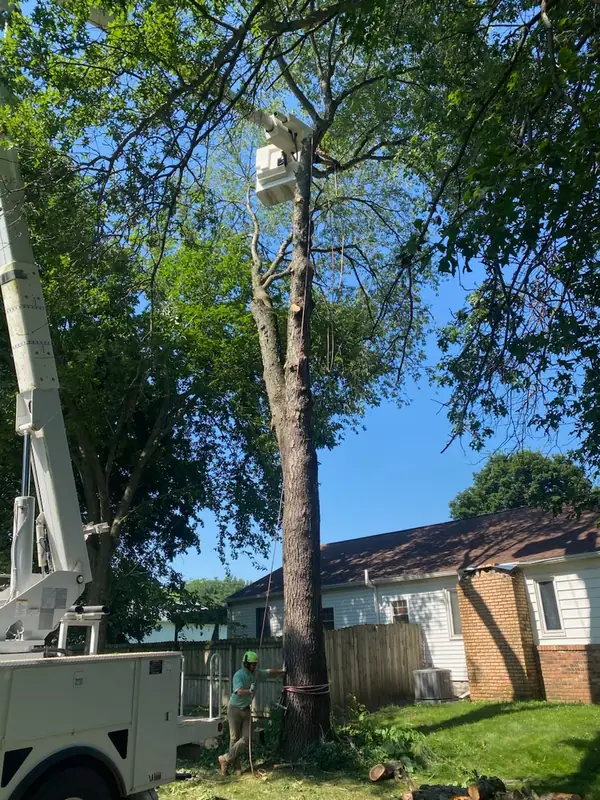
A tree right next to a house can almost always be removed safely. It just can't be felled. It comes down in small sections from a bucket truck, starting with the limbs over the roof, and the job is priced after someone has stood in the yard and worked out where each piece will go.
What makes a tight removal different
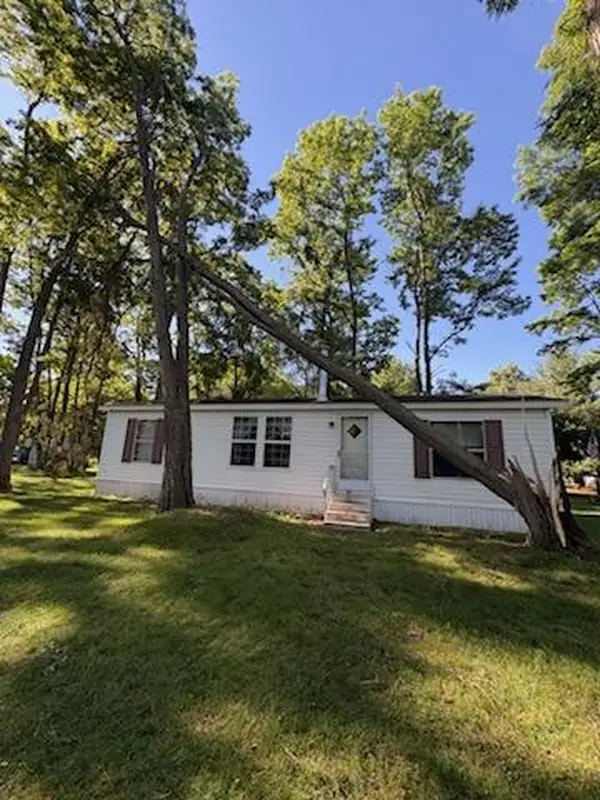
On an open lot, a tree can be notched and dropped in one direction. Next to a house, the only open space is usually a strip of lawn a few feet wide, and sometimes not even that. Maybe the tree was planted as a sapling ten feet from the foundation fifty years ago. Maybe it's a volunteer that came up along the garage and nobody pulled it. Either way, the canopy now hangs over shingles, gutters and a service drop, and gravity has nowhere safe to put it.
So the order of work flips. Instead of the trunk first, the limbs over the house come off first, each one cut small enough to control. Then the rest of the canopy. Then the trunk, top down, in rounds short enough that nothing swings toward the siding. The last piece is a low stump sitting where the tree stood.
Why the bucket truck matters here
From a bucket, the person cutting can get beside the limb instead of under it, and can reach limbs over a roof without anyone standing on the roof. That means shorter pieces, cleaner cuts, and a lot more control over where each piece goes. In our photos you'll see the truck parked right beside houses, sheds and mobile homes with its outriggers set down on plywood pads, which spread its weight across the lawn instead of into it.
When the truck can't get close enough, because of a fence, a septic field, a narrow side yard or soft ground, we tell you that at the estimate, along with how that tree will come down instead.
What we look at before we price it
- Which way it leans and where the weight is. A tree with most of its canopy over the house is a different job from one that only has a few limbs reaching over.
- What's underneath. Roof, gutters, a deck, an AC unit, a fence, a flower bed you care about. We'll ask.
- The wires. The service line from the pole to your house is common. If limbs are tangled in the main lines along the road, the utility has to clear those first.
- Access for the truck. How close we can park, whether the ground is firm, and whether a gate or a fence section needs to come off.
What you can do before we come
Move cars out of the drive, bring in anything fragile from under the tree, and keep kids and pets inside while we work. If there's something under the tree we should know about, like a septic tank, a sprinkler line or an invisible fence, tell us at the estimate.
This is one kind of removal. For the whole picture, including cleanup and stump grinding, read our overview of tree removal around Bremen.
Tight-yard removals near you
Close-quarters removal questions
They can crowd sidewalks, lift pavers and get into old clay sewer lines. Real foundation damage is less common and usually needs a structural look. What we can tell you is whether the tree itself is a risk to the roof, and whether it should come down.
Only if the tree is in the main lines along the road or a line is already down. For limbs near the service line to your house, we'll tell you at the estimate whether the utility needs to be involved.