
Stump removal in Bremen, IN: grinding it out vs. pulling it out
People say "stump removal" and mean two very different jobs. One leaves a patch of wood chips you can seed over by the weekend. The other leaves a crater. Here's how to tell which one your yard actually needs.
The short answer
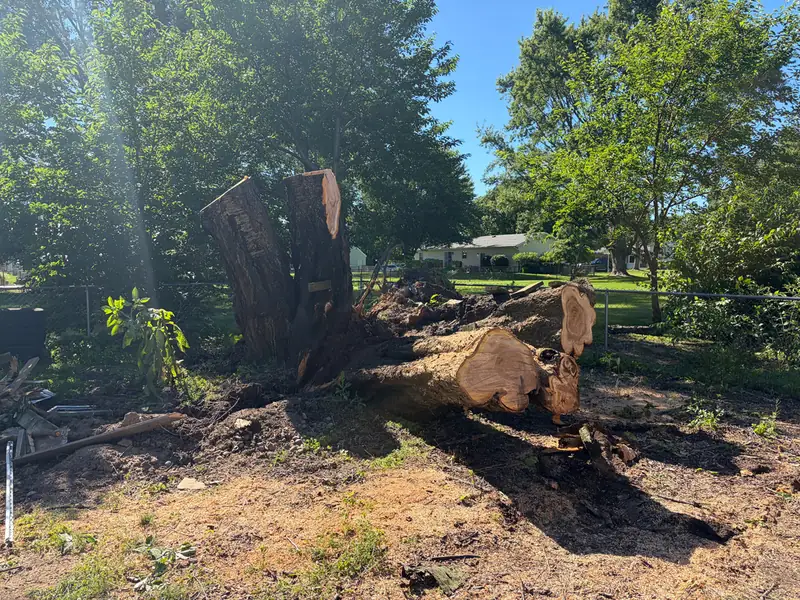
For almost every yard, grinding is the better way to remove a stump. The grinder chews the stump and its top roots into chips below the grass line, and the rest of the root system rots away underground over the next few years. Pulling the whole stump out is only worth it when something has to be built, poured or dug exactly where the stump sits.
What "removal" really means for a stump
A mature maple or oak has roots reaching out past the edge of its canopy, most of them in the top foot or two of soil. Pulling the stump means tearing that whole mass out of the ground: an excavator or a big loader, a hole wider than the stump itself, torn-up sod all around it, and a pile of soil-packed roots that is heavy and awkward to get rid of. On a lawn, it looks like the tree came down in a storm all over again.
Grinding goes the other way. It takes the stump and the flare of roots right around it down below the surface and leaves everything farther out in the ground, where it slowly breaks down. The yard stays in one piece.
When pulling the stump makes sense
- A foundation, footing or slab is going right where the stump is.
- A new septic line, drain tile or water line has to be trenched through the spot.
- You're re-grading the whole area anyway, so a big hole costs you nothing extra.
If none of those apply, pulling mostly buys you a bigger mess. When a whole wooded lot is being cleared for a house or a barn, stumps are handled as part of clearing ground for a new build, which is a different job from one stump in a finished lawn.
Surface roots that stick up out of the lawn
Silver maples are notorious for this. Roots ride up on top of the soil and the mower hits them every week. Those runs can usually be ground out along with the stump: the grinder follows each root out from the trunk and takes it below grade. Past a certain point we stop, because chasing every root to its end tears up far more lawn than it saves. We'll show you at the estimate how far we'd go.
If the tree is still standing and healthy, grinding its surface roots can hurt it. That's a question for a look at the tree itself, not just the roots.
What happens to the hole
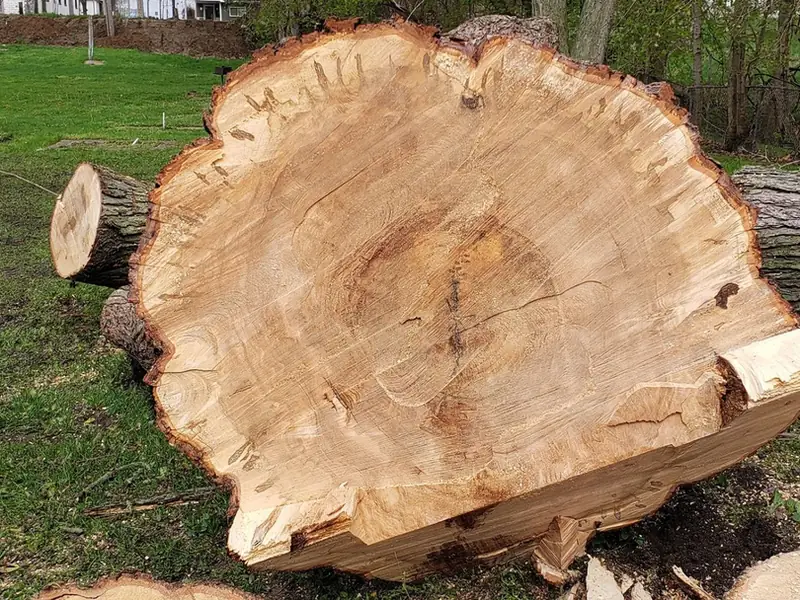
After grinding, the spot is a mound of chips and soil. We rake it back into the hole so you're not left with a pit. Over the first season, the chips settle as they break down. For grass, most people rake off the top few inches of chips, fill with topsoil, and seed; chips mixed deep into the soil will pull nitrogen while they rot, so new seed does better on clean dirt. If you plan to replant a tree, go a few feet to one side of the old stump rather than right on top of it.
Before anything gets dug
Grinding stays near the surface, but pulling a stump or trenching out roots goes deep. Anywhere you're digging below the grinder's reach, call Indiana 811 first so the buried utility lines get marked. Gas and electric services love to run right past old yard trees.
Just want the stump gone? Our stump grinding service covers how deep we go, what happens to the chips, and stumps someone else left behind.
Stump work around the area
Stump removal questions
Most won't. A few kinds, like some maples, poplars and locusts, can push up sprouts from the roots for a season or two. Mowing them off each time wears the roots out.
It can, but a hardwood stump takes many years, and the whole time it's something to mow around, trip over, and a home for ants and fungus. Grinding it is the fast version of the same thing.