
Clearing a wooded lot for a new house or pole barn
Before the excavator can dig a basement, the trees have to go, but not all of them. We clear the building pad, the drive and the utility runs, and leave the trees you'll want shading the house in twenty years.
The short answer
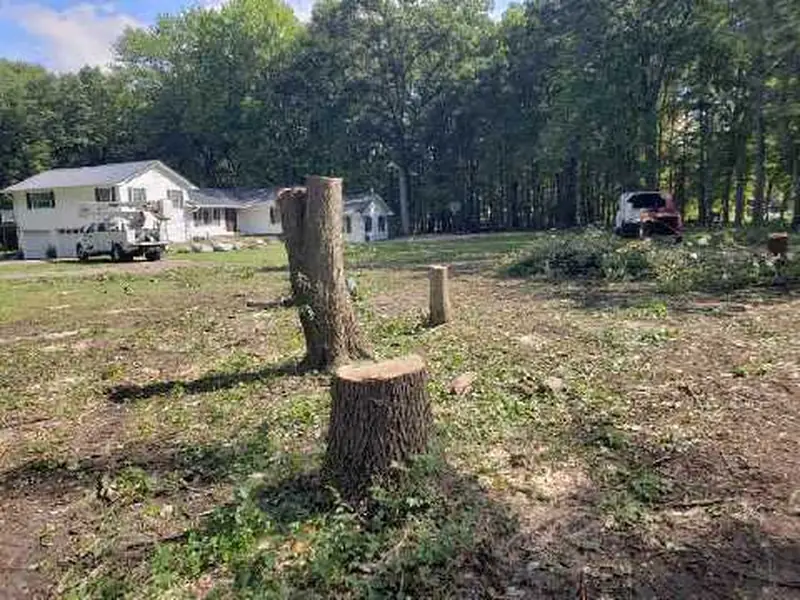
New-construction clearing takes the trees and brush out of the footprint of everything you're building: the house or barn, the drive, the septic field and the utility trenches, plus a working margin around them. The trees outside that line are left standing on purpose, and the ones right at the edge get a hard look, because a tree whose roots get cut by the foundation dig often dies a few years later.
Mark it before anyone cuts
The single most useful thing you can do is stake or flag the build before the estimate. Clearing is permanent; nobody can put back a sixty-year-old oak. With the corners of the house, the drive, the well, and the septic area marked, we can walk the lot with you and agree tree by tree on what's coming out.
Ask your builder and your excavator how much room they need around the foundation for equipment and backfill. That working space is usually wider than people picture, and it decides which edge trees survive.
Which trees to keep
Keeping trees near a new house is worth it when they're healthy, a species that handles disturbance well, and far enough from the dig that most of their roots survive. The roots of a big tree spread well past its branch tips, and the top foot of soil is where most of them live. A trench or a footing cut through that zone on one side can be the end of the tree, just slowly.
Trees we usually suggest taking, even outside the pad:
- Dead or declining trees that will lean over a roof you just paid for.
- Trees whose roots will be cut on the house side by the basement or crawlspace dig.
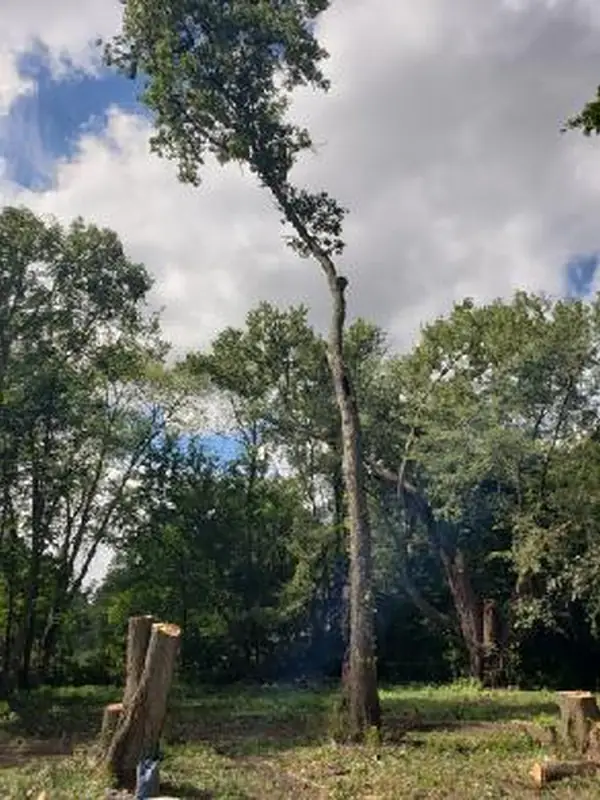
- Tall, thin trees that grew up crowded in the woods and will be standing alone and wind-exposed once their neighbors are gone.
How the clearing goes
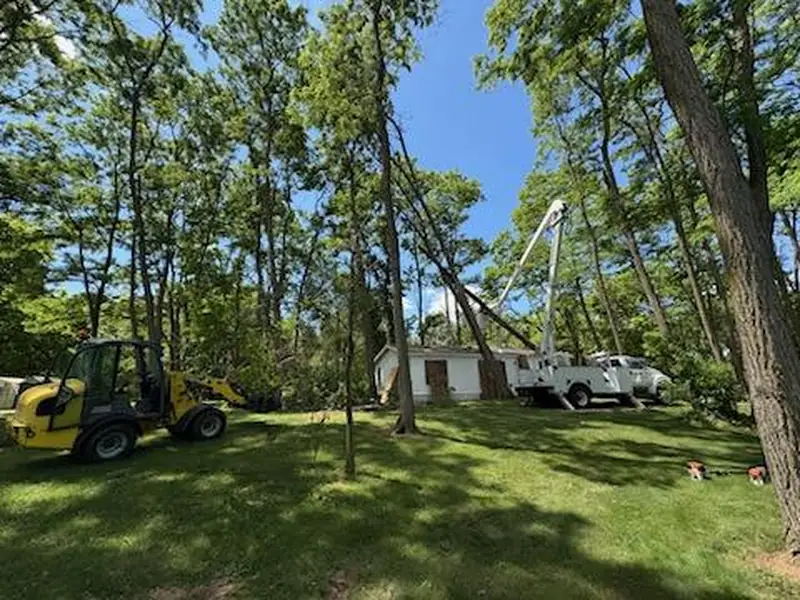
Bigger trees come down with the bucket truck and the saw, and the compact loader moves the trunks and brush out of the way. Brush is chipped. Stumps inside the footprint are the next question: whether they're ground below grade or dug out depends on what's being built on top of them, and that's worth settling with your excavator ahead of time. More on that trade-off in our guide to stump and root removal.
Timing with your builder
Clear too early and brush starts growing back into the pad. Clear too late and the excavator is sitting on the road waiting. Most people schedule clearing a few weeks ahead of the dig. Ground that's frozen or dry is kinder to the lot than a soaked spring, when loaded equipment sinks in.
Not building? Our lot clearing service also covers fence rows, overgrown back acres and ground going back into the field.