
Dead tree and dead ash removal in Bremen, IN
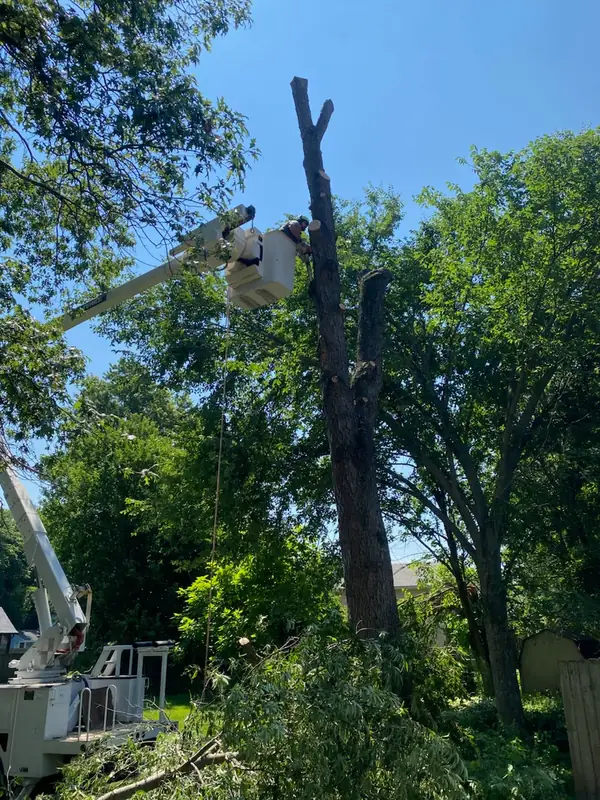
A dead tree doesn't stay the same tree. Every season it stands, the wood dries, the bark loosens and the limbs get easier to snap. We take them down from the bucket while there's still enough strength in the wood to do it safely.
The short answer
Take a dead tree down before it starts dropping pieces on its own. Dead wood gets more brittle every year, which makes it more likely to fail in the next wind and harder to take down safely the longer you wait. If it's standing over the house, the drive or a line, don't let it sit another season.
Why dead wood gets more dangerous every year
A live limb bends. A dead one breaks. Once a tree dies, its wood starts drying out and decay moves in from the inside, and the parts that fail first are the ones you can't see from the ground: the attachment points where big limbs meet the trunk. That's why dead trees so often shed a limb on a calm day, with no storm to blame.
It also changes how the tree has to come down. A tree that has only been dead one summer can usually be taken apart the normal way, piece by piece from the bucket. A tree that has stood dead for years may not hold the weight of a rope or the shock of a cut limb, and every piece has to be smaller and handled more carefully. Waiting doesn't just add risk; it adds work.
Dead ash trees in northern Indiana
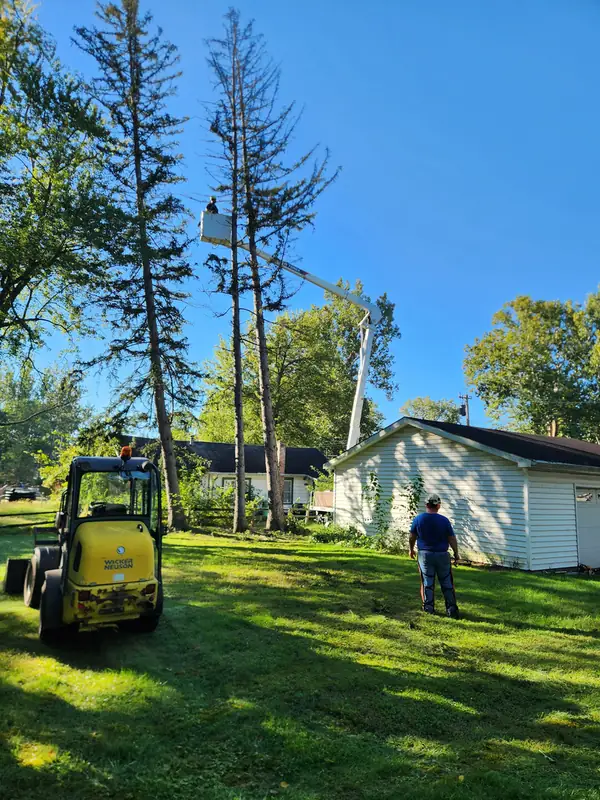
If you have a dead tree in a yard around Bremen, there's a good chance it's an ash. The emerald ash borer, an invasive beetle that kills ash trees by feeding under the bark, was first confirmed in Indiana in April 2004 and has since been found in all 92 counties. Most untreated ash in this part of the state have died or are dying.
Dead ash are known for turning brittle fast. You'll often see the bark peeling off in sheets, woodpecker holes all over the trunk, and small D-shaped exit holes where the beetles came out. Sprouts coming up from the base of the trunk while the top stays bare is another giveaway.
Source: Indiana DNR, Emerald Ash Borer; Purdue News, April 2004.
How to tell if a tree is dead or just having a bad year
Not every bare tree is gone. Some drop leaves early in a dry August, and a late frost can make a healthy tree leaf out weeks behind its neighbors. A few checks you can do yourself:
- Scratch a twig. Green or moist just under the bark means it's alive. Brown and dry all the way through means that branch is dead.
- Look at the whole crown in June. If half the tree leafs out and half doesn't, the bare half is dead wood whether or not the rest survives.
- Check the bark and the base. Loose, falling bark, mushrooms at the root flare, and soft or hollow spots near the ground are signs of decay.
If only part of the tree is dead, it may be a trimming job instead of a removal. Taking the dead limbs out of a living tree is covered on our deadwood removal page.
What we look at before we price it
At the estimate we look at how long the tree has likely been dead, how sound the trunk is where it meets the ground, what's under it, and whether the bucket truck can reach it. A dead tree over open yard is a straightforward job. A dead ash leaning toward a roof or a service line is one we plan cut by cut. You'll get the price in person, before anything is scheduled.
Part of our tree removal work. For how any removal goes, from the plywood pads under the truck to the raked yard at the end, go back to tree removal in Bremen.
Dead trees we take down around the area
Dead tree questions
No. Once an ash has lost most of its canopy to the borer, it won't come back. Treatment only helps ash that are still mostly healthy, and it has to be repeated. A dead ash needs to come down.
It can be. Frozen ground holds the truck and the loader well and the lawn is dormant. What matters more is not waiting through another storm season with a dead tree over the house.
Yes. Ask for it at the estimate and we'll price the stump with the tree. Our stump grinding takes it below the grass line.